34. Death and the Maiden IV
I return to you, draped in a cloak of blood.


“It is August and I still haven’t adapted to the year. It’s August and I'm already losing the year.”
by Anne Truitt, from “Turn: The Journal of an Artist” (1982)
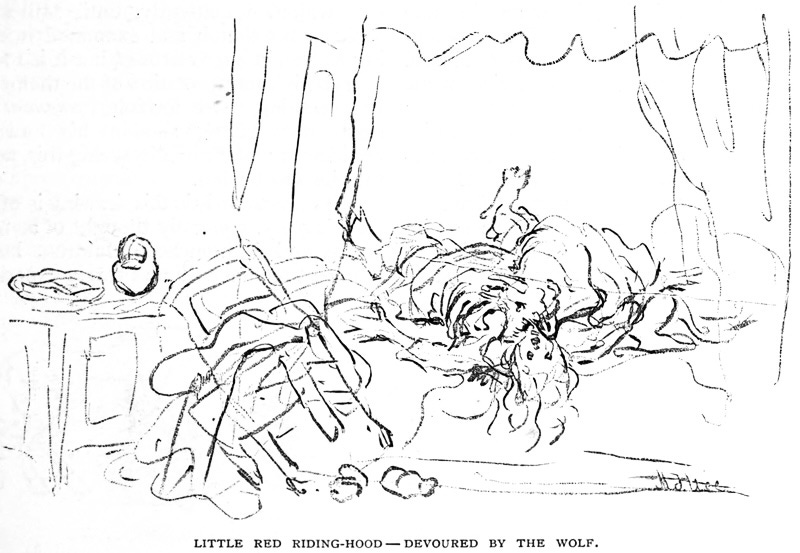
[TW] One very soft trigger warning for an illustration of Little Red being cut out of the Wolf’s belly in section II.I— it is in black and white, woodcut style, but might still be a tad disturbing. Additionally, the word “rape” is used once in this newsletter when discussing themes of the classic fairytale. The word only serves to aid in the discussion of girlhood as a grooming for victimhood. There are no graphic metaphors or examples to go along with it. Still, reader discretion is advised.

01/08/2026, London, UK
My dear,
Long time no write. I return to you, draped in a cloak of blood. The woods have been a cruel mistress to me. The branches have scratched and the mud has stained, the animals have stalked me through the long night. Nevertheless, I have found my way back to you, no compass needed! The best navigator is one born of fear, it turns out. Struggling with amnesia is only one of many undoubtedly Herculean trials yet to come. Yes, “a non-writing writer is a monster courting insanity”1… But I never go half way, my dear, as you well know. Instead of a simple courtship, I took madness to bed. The honeymoon was ever sweet and the hours wiled away in her embrace, so tender in ignorance. It is always easier to face away from your life, rather than pick up the fight.
You are my most impatient darling, my mistress of the minute hand. Wanting and waiting for a ledger of lost time. Very well. During my three month sabbatical I dreamt of bats and big spiders, swans in the bed (two white and one black). The menagerie of the mind. It is said that to dream of bats is a subconscious call to trust your intuition— something I have much neglected in favour of late night shifts and early mornings. Or perhaps I simply fear a rabies shot. The hotel looms tall, still. But those memories have to wait their turn. They all do. After my absence the queue is quite long, you see. All the trophies of being hunted will need to be displayed, one by one, in due time, my dear.
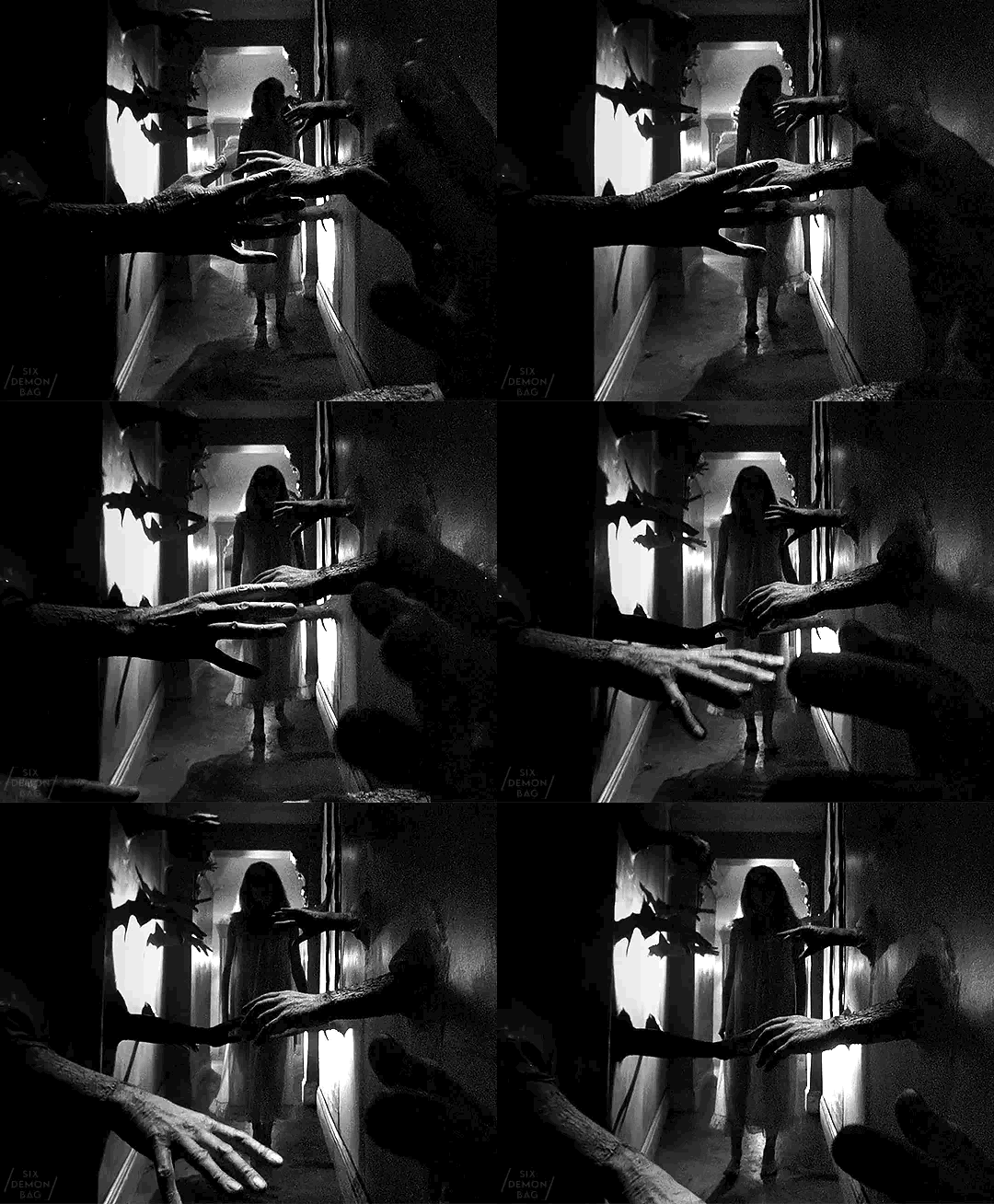
Anyhow, here I am once more. Returned from the dead on your doorstep. The bristle of the mat is rough on my cheek and it is so, so cold outside. Would you please invite me in?
‧₊˚🖇️ ✮⋆˙ ₊˚💌⊹⋆。𖦹 ° This newsletter contains the following sections:
I. Archive Sources // II. Death and the Maiden IV: Little Red Riding Hood // III. // Obsessive Tendencies: What I’ve Been Loving Lately // Outro, with its usual ornaments
I. Archive Sources
“See! sweet and sound she sleeps in granny’s bed, between the paws of the tender wolf.”
by Angela Carter, from “the Company of Wolves” (collected in “the Bloody Chamber”, 1979)
My dear, I would be remiss in sending you to the path without a primer on its many rules. You know, without rules there would be no fun in breaking them. So, consider this an introductory quest. This here is your basket to take to grandma; victimhood, eroticised innocence, corruption. Bread and wine on the side, if you will. You could stop along the way to pick blackberries, but hurry now. The night is approaching steadily, my dear, so be on your way, and remember to stray, stray, stray from the path, and off the cliff, and into the labyrinthine confusion of the self.
It is the only path worth walking, after all.
“Little Red Riding Hood: Victimage in Folktales and Cinema—A Case Study” - link
Beyond a simple tale of childish disobedience, “Little Red Riding Hood” can be read as a depiction of an initiation ritual— the story of a girl, cast into the dark woods, eventually to learn a lesson and be reborn through her own mock-death in the belly of the wolf. Through a deconstruction of the 2011 blockbuster film “Red Riding Hood” (dir. Catherine Hardwicke), the author of the paper tries to argue that the film’s mirroring of the fairytale, and the elements it chooses to expand on (the theme of scapegoating), end up resurfacing the theme of initiation and social structuring, by demonstrating that the film, ultimately, shows “a community [saving] itself from itself by expelling a part of itself”. A heavy psychoanalysis, but nevertheless quite intriguing.
“Little Red Riding Hood is not as innocent and pure as she may seem to those who read the Brothers Grimm variant or are familiar with cartoon adaptations. Little Red Riding Hood is not so much a pretty little girl as a young woman experiencing profound sexual impulses. She wants to grow and open herself to the pleasures of life; she is driven to follow the wolf and crawl into bed with him by her own desires. She is not innocent, yet still she is in danger; that is why she needs to be told that wolves-and men-are dangerous even if they look attractive.”
“Innocent Initiations: Female Agency in Eroticized Fairy Tales” - link
Taking the scalpel to modern “eroticised” fairytale adaptations, this paper attempts to look at the “innocent initiation” trope within them. It paints an intriguing picture of the Madonna/Whore complex in [eroticised] fairytale heroines; often involved in (subconsciously) sexual scenarios, but always shrouded in ignorance of such scenarios. While eroticised adaptations have the chance to combat such veiled naivety, they more often end up imbuing their heroines with a sense of sexual desire, but then subsequently cutting her from her own body and feelings to engender a mock innocence ripe to be exploited by the plot (for the reader’s titillation). That is all fair and well, but the paper’s conclusion that this lack of the heroine’s agency then further denies the [feminine] reader their agency is one I cannot fully agree with2.
“The innocent initiation tales feature a sexually naïve heroine who, as a part of the plot, is thrust into a sexually charged situation. She is initiated into sexual pleasure without knowing precisely what is going on, and she unconditionally enjoys the event. The focus of these stories is on the experience of the female protagonist, yet the structure of these stories-because of their similarity to fairy tales-calls into question the heroine’s agency.”
“Erotic Infidelities: Angela Carter's Wolf Trilogy” - link
Angela Carter chose to weave the bones of Little Red into three separate tales for her collection “the Bloody Chamber” (1979); “the Werewolf”, “the Company of Wolves”, and “Wolf-Alice”. These, this paper argues, differ from the blatantly eroticised adaptations we have previously inspected, because they argue for an alternate erotics. Rather than merely recasting the usual phallocentric desire(s) in a feminine voice, Carter’s stories start at the root; transforming the desire itself. The result is a trilogy of wolf-stories far more uncooperative than the standard Little Red adaptations. Contradictory, unsavoury, transformative, they come closer to depicting a fairytale world of equally boundless (un-gendered) sexual expression than the more “faithful” eroticised adaptation, going beyond mere titillation into a much more interesting corruption. Delicious fare, my dear.
“Carter’s fairy tales covet and create tensions with the hegemonic erotic, challenge readers to find an other erotic in a dramatically different, often disturbing, sexual imagination. They are, as Bacchilega contends, “doubling and double: both affirmative and questioning, without necessarily being recuperative or politically subversive” (22), more invested in the hollowing out, the ruining from within than in any simple reversals infidelity over recuperation.”
II. The Maiden and the Wolf
“Like Little Red Riding Hood on her way to Granny’s house via the underworld. Except that I myself am Granny, and I contain my own bad wolf. Gnawing away, gnawing away.”
by Margaret Atwood, from “the Edible Woman” (1969)
Time is a flat circle, starting with “Once upon a time”, and ending with a renewed iteration of “Death and the Maiden” analysis, a time-old institution of this humble newsletter. Like the fruit in the orchards, the dying summer ripens my interest in this trope once more. Perhaps it would have been easier to lay the spectre of Death and the Maiden (DatM) to rest. Refuse any more haunting apparitions, open the tomb, spread out that binding circle of salt. But in all honesty, my dear, I couldn’t. It seems that even after three parts (and a wedding), there is still more to taste of their peculiar union. And so this issue, as a result, tastes of fur, coarse on the tongue. It tastes of dirt, of crushed velvet. Red like blood, or a fresh bruise. Textures in the mouth, hiding behind growls. We’ve come to face the Wolf.
Promise to climb in after me once it opens its jaws?
A substantial part of my late absence was dedicated to the White Lily Society’s first event, which chronicled the Gothic heroine’s journey (adapted from the classic hero’s journey, of course) as a tool for navigating modern girlhood. More on that in some future letter. The point is that the Wolf made its appearance there, too. As the veiled guide of the evening, the Virgin to the audience’s Dante, I read a tale of twisted descent, broken into three parts; “We do not imagine the wolf in the woods, nor the poison apple. We cannot imagine the figure there, on the edge of the meadow, watching us with some emotion completely foreign to us. Envy, lust, perhaps hatred.”
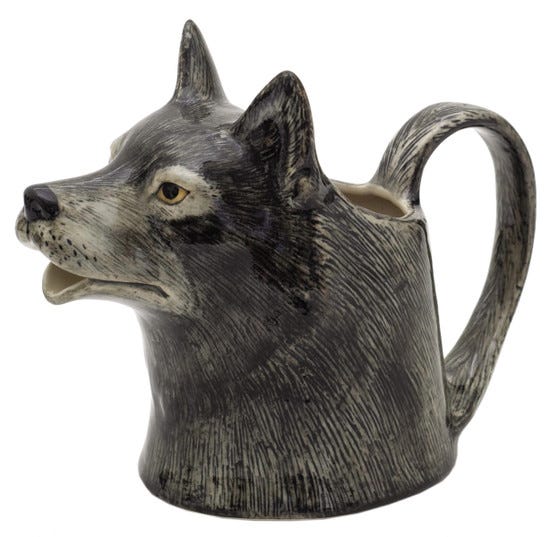
The Wolf, there, was meant to evoke Hades, Death, our monstrous bridegroom. He knows so many names. Here, it is much more literal. My feverish digging for DatM has led me straight to the woods, and to Little Red Riding Hood’s domain. So, tag along, into the belly of the beast.
II.I Archetyping Little Red
“Once upon a time, in a village, there lived a little girl, the prettiest you could wish to see. Her mother adored her, and her grandmother adored her even more. The kind lady had a riding-hood made for her granddaughter; it was red, and it suited her so well that everywhere she went she was called Little Red Riding-Hood.”
by Charles Perrault, from “the Complete Fairy Tales” (original tale 1697, Oxford World Classics Edition from 2009)
As a story, a fairytale, “Little Red Riding Hood” is but a keyhole, a lock. It serves only to allow us access back into that all-hallowed domain of Death and his Maiden. Believe it or not, but the wolf and his lamb have been a pairing emblematic of this trope since the dawn of mankind3 telling stories to itself in the deep darkness of night. But still, ancient origins aside, I would be remiss in not properly exploring the bones of Little Red, before moving into our full dissection.
Previously, we have established that there are two major indexes we use to classify fairytales: one to outline, and one to fill in the story. The first is Hans-Jörg Uther’s 2004 “the Types of International Folktales: a Classification and Biography”4, which labels Little Red Riding Hood as a tale type 333 (of the same name, previously known as “the Glutton”). The second index- the “Thompson Motif Index of Folk Literature”5- then aims to categorise every tale type’s most common ingredients, which for Little Red mix with the aftertaste of washed velvet;
J21.5 “Do not leave the highway”: counsel proved wise by experience.
Z18.1 “What makes your ears so big?”— “To hear the better, my child”, etc.
K2011 Wolf poses as “grandmother” and kills child.
F913 Victims rescued from swallower’s belly.
Q426 Wolf cut open and filled with stones as punishment.


Most of the tales we now recognise as rhizomatic branches of the “Little Red Riding Hood” archetype will contain one or more of these elements, my dear. Usually, the beginning setup (“Don’t stray from the path”) is largely congruous, but endings vary based on author and era— as they usually do. After all, throughout time our fashionable modes of storytelling and their acceptable attitudes have shifted rapidly. And thus, so has Little Red, shifting between victim and semi-empowered protagonist, between gullible and sly, between sexual or behavioural moral. All can shift on the dirt path through the forest. Much like the path itself, which is always re-routing, re-rooting. Best to be wary of where one places their foot, before everything crumbles below.
II.II a Little Red History
“Once upon a time, there was a sweet little maiden. Whoever laid eyes upon her could not help but love her. But it was her grandmother who loved her most. She could never give the child enough. One time she made her a present, a small, red, velvet cap, and since it was so becoming and the maiden insisted on always wearing it, she was called Little Red Cap.”
by the Brothers Grimm, from “the Complete Fairy Tales” (Vintage Classics, 2007), p125
As a result of all these shifting stones, your opinion of Little Red, my dear, might vary greatly on which version of the tale you grew up with. Whichever version kept you company as you grew into yourself, if any version at all. The cultural ubiquity of the tale, after all, functions largely as a cauldron boiling the story down to its most basic objects. The basket, the cloak, the fur of the wolf. All existing to be sold back to you in the form of a Halloween costume that is more assortment of iconography than rich morality tale. You might live in ignorance of all the gruesome ways in which a girl, cloaked in red, can meet her fate. In some, the tale ends in despair, a mix of velvet and stomach acids. In others, Little Red gets rescued from the wolf’s belly in cartoon-ish fashion, after which the wolf is sometimes stuffed with rocks and drowned. Or the wolf can slip and fall of a roof— you get the idea. Violence and bloodshed rule this deceptively simple tale of [wo]mankind and wolf.
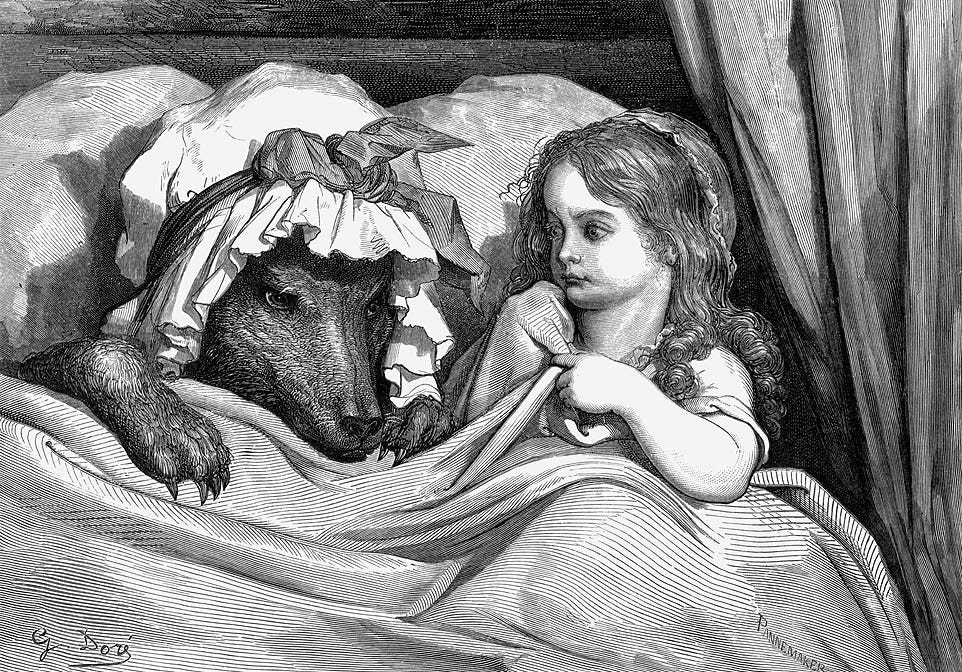
Charles Perrault presents us with our first formalised concept of the fairytale in 1697, ready to be standardised for the masses. Though, like most of his tales, the target audience is not children, and its purpose is not as a morality tale. Rather, Perrault’s outrageous fantasies were meant to be entertainment for the nobility at Versailles and scattered throughout greater France. The fairytale is not yet an invention for strong-arming the childhood imagination, though Perrault’s unique post-script rhymes do have a whimsical, somewhat lecturing quality to them. Perrault’s “Little Red Riding Hood” (or, “Le Petit Chaperon Rouge,”) is a child of great beauty, beloved by all— especially by her doting grandmother, who gifts her a riding cloak of deep scarlet. One day, Little Red is sent by her mother to bring a basket of delights to her grandmother, who isn’t feeling all too well. On the way, Little Red encounters the Wolf, and because she doesn’t know any better (“The poor child, who did not know that it is dangerous to stay and listen to a wolf”, 2009, Oxford World Classics translation), she gleefully tells the beast all about where she’s going and how to get there.


The Wolf bets that he can get to grandma’s house much faster than Little Red, and is proven correct, as she gets languorously distracted along the way, abandoning all haste. When she arrives, the furred creature has already taken the grandmother’s place, and Little Red, none the wiser, undresses and gets in bed with “grandma”. However, in classic fashion, she does question her grandma’s much-changed appearance… What long arms and legs grandmother has. What big ears, eyes, and finally, big teeth. “All the better to eat you with!”. The wolf devours the girl, and the story fizzles out, with Perrault telling his audience;
"The moral of this tale
Young children, as this tale will show,
And mainly pretty girls with charm,
Do wrong and often come to harm
In letting those they do not know
Stay talking to them when they meet.
And if they don't do as they ought,
It's no surprise that some are caught
By Wolves who take them off to eat.

I call them wolves, but you will find
That some are not the savage kind,
Not howling, ravening, or raging;
Their manners seem, instead, engaging,
They're softly-spoken and discreet.
Young ladies whom they talk to on the street
They follow to their homes and through the hall,
And upstairs to their rooms; when they're there
They're not as friendly as they might appear:
These are the most dangerous wolves of all"
by Charles Perrault, from “the Complete Fairy Tales” (original tale 1697, Oxford World Classics Edition from 2009)
The Brothers Grimm then gain custody of Little Red’s bones in 1812. Their “Little Red Cap” (or “Rotkäppchen”) is also sweet, and beautiful, and she too, sets off on a walk to provide her sickly grandmother with provisions— the big difference in set-up is that here Little Red gains the motherly advice not to stray off the path on her journey. Already, typical qualifications are failing us; Thompson did not prepare us for Perrault’s origin, devoid of omnipotent warnings.
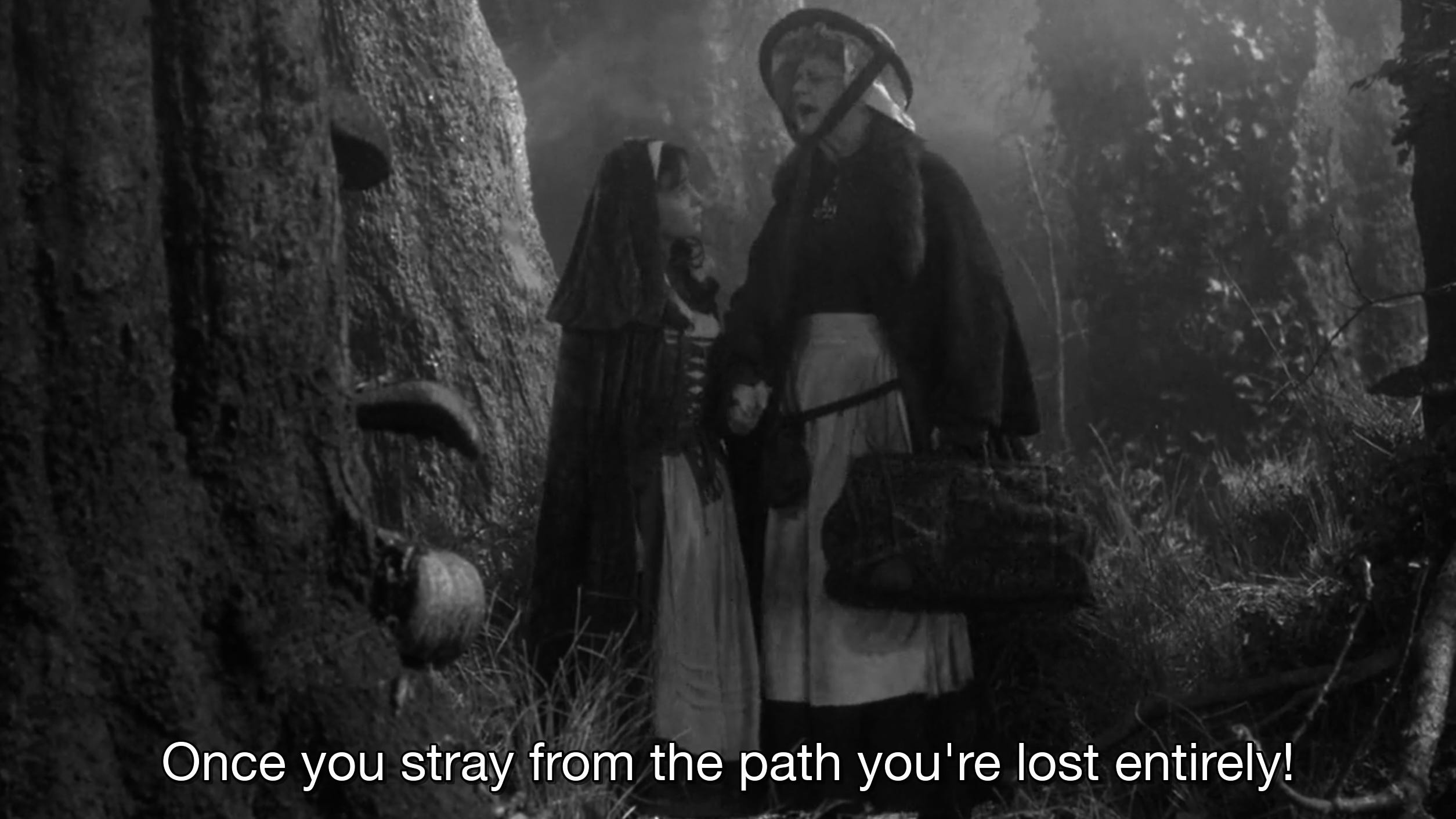
Again, Little Red meets with the Wolf, and is “unaware of what a wicked sort of animal he [is]” (via Vintage Classics, 2007). Instead of offering a bet, the Wolf points her in the direction of a patch of wildflowers, surely to please an ailing grandmother. She arrives at the cottage to find the door open, and the Wolf waiting to pounce on her, if only after their usual dialogue (big ears, big hands, big mouth). But the meal of both girl and grandmother tires the Wolf, who coyly settles into grandma’s gingham sheets for a post-dinner nap. Or rather, a deep sleep, which produces snores loud enough to alert a huntsman passing by. Suspicious of the old woman’s absence in her cottage, the huntsman takes his sharpest knife and cuts through the fur and muscle of the Wolf’s belly, revealing grandmother and grandchild, alive and unharmed.
For punishment, the trio decides to sew stones the size of loaves into the Wolf, so that when the beast wakes and wants to make a run for it, the weight carries him straight off, and into death. But the tale doesn’t end, as without Perrault’s unsubtle morals it wants to illustrate its heroine’s newfound vigilance. The story repeats itself, with Little Red meeting another seductive Wolf in the woods. However, armed with her newfound prudent disposition, she rushes straight to grandma, and together they devise a scheme to kill the Wolf, no huntsman needed. As the Wolf intends to wait them out until darkness, grandmother sends Little Red to fill a barrel outside with water, and the pan grease from last night’s dinner. Reaching for the smell of the sausages, the Wolf slips off the roof where he was planning his ambush, right into the barrel, in which he then drowns. Quite an undignified end for the beast.


Other versions of the tale exist, some without the tell-tale red of our young heroine’s cloak. An early version entitled “the Grandmother’s Tale”, also originating from France ca. 1885, omits the mother and the cloak, as well as the onus for our heroine’s journey (grandmother’s ill health) and instead involves her meeting the Wolf on her journey, asking her if she is taking “the path of needles” or “the path of pins”6 to her grandmother’s cottage. She chooses the former, though the choice is only an illusion. No one path can prevent the inevitable; the Wolf rushes and devours poor, defenceless grandma. Bizarrely, the Wolf then tricks Little Red (sans red) into eating some of grandmother’s raw flesh, and drinking her blood, pretending it is wine7. The girl undresses to get into bed with her Wolf-grandmother, throwing her garments into the open fire. First, her dress, then her underskirts, and ending with her stockings. The usual pantomime exchange takes place, but Little Red gets suspicious, and pleas to be let out to use the outhouse. There, outside of the Wolf’s gaze, she narrowly makes her escape, into the great darkness of the forest. Presumably to make her way back to the village, and the evils she knows.
II.III the Divergence of Maiden and Wolf
“The girl and the wolf inhabit a place, call it a forest or the human psyche, where the spectrum of human sagas converges and where their social and cultural meanings play out”
by Catherine Orenstein, from “Little Red Riding Hood Uncloaked: Sex, Morality, and the Evolution of a Fairy Tale” (2002), p8
What makes a tale potent is its latent content— its subtext, its traditions, its contradictions. The latter, as we are starting to unravel, my dear, are plentiful. It is interesting then, that out of our great collection of popular fairytales, “Little Red Riding Hood” is so everlasting. Unlike her peers, Little Red has had no singular adaptation, has had no Disney film, nor IP owner. And yet, most people are familiar with at least some assortment of the Thompson motif ingredients, though they can be fuzzy on what ending they grew up with (I know I certainly am, my dear). Little Red has grown beyond her story, into mere iconography. People are aware of her, but not her (many) endings. They know only the supposed moral core of her, as an instrument for teaching children to be obedient above all.
In many ways, Little Red’s mother’s advice reminds me of my own childhood on the Dutch moors. Being told to watch for stag beetles underfoot, be quiet in the brush. Do not go off the path, for fear of boars. But, there is another layer to the advice; in addition to the more well-remembered bit against straying from the path, the Grimm’s have Little Red’s mother tell her to mind her manners, and not to look in the corners of grandmother’s house. There is an underlying notion that knowing what hides among cobwebs and shadows is not proper for a girl— and yet Little Red’s interaction with the Wolf, both in the Perrault and Grimm versions, grows malevolent because of the opportunity presented by her ignorance. The Maiden cannot protect herself from what she doesn’t know; her naivety makes for a flimsy shield, and Death’s initial stronghold is subsequently fortified by her porous innocence. Equally, blind obedience in a child is not a worthy cultivation.


Girlhood often takes the form of a gilded cage, my dear. The very “feminine” innocence cultivated in the Maiden is what allows eventual tragedy to befall her. And since the goal of the fairytale is marriage8, this tragedy is often sexual in nature, to hint at the marital, the [traditionally heterosexual] reunion of the sexes, the unfamiliar Other. The story sets Little Red up to be predated upon. This is what Archive Source 2 correctly points out as a sort of sexual asymmetry; the Wolf-pervert taking advantage of Little Red’s unknowing assimilation into his desirous fantasy. She does not know the gift she is giving him in allowing herself to, eventually, be eaten up… Or does she?
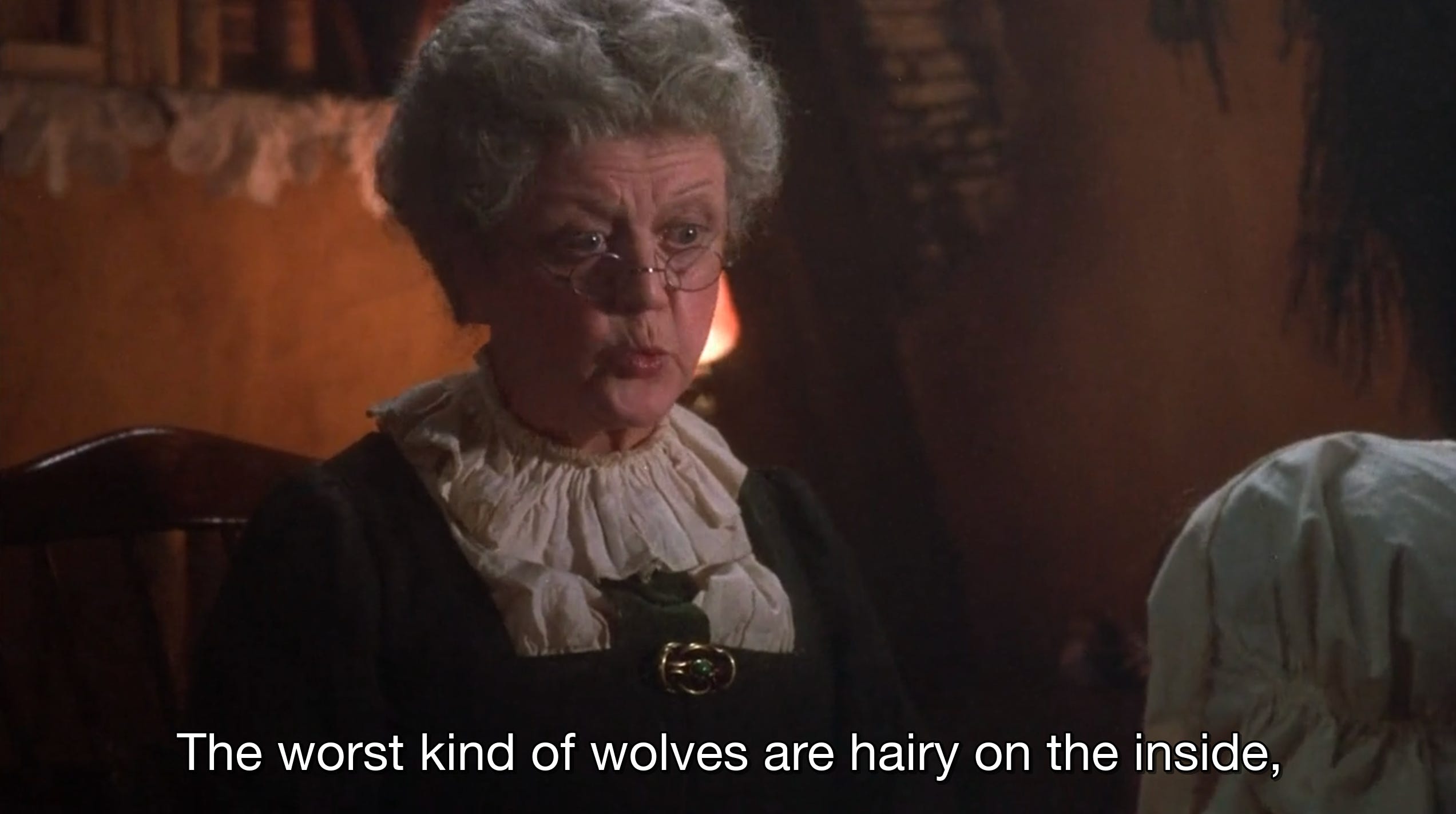
Much has already been said about Death as antagonistic husband; the Wolf in sheep’s clothing, or, the Wolf we don’t recognise as a Wolf. It’s an easy parallel to point to. Perrault makes it in his postscript, Angela Carter refers to it in her three modern adaptations of the story (“The worst kind of wolves are hairy on the inside”). But I would warn against boiling the moral of Little Red down to one of rape, would refrain of searching for one singular explicit moral at all. Rather, the story of Death and the Maiden is always one of many expressions, like a funhouse mirror, warbling and impossible. It would be a disservice to reduce it exclusively to a story of feminine9 victimhood, and masculine assailant.
Catherine Orenstein, in her book “Little Red Riding Hood Uncloaked: Sex, Morality, and the Evolution of a Fairy Tale” (2002), points out that the divide between genders in our beloved pantheon of fairytales is actually not skewed in favour of the masculine; the Grimm brothers, for their part, penned some two hundred tales, and most of the ones we have carried with us cast the feminine in the role of the protagonist, with each their own individual characterisation, while the masculine is relegated to the stock characters of Father / Prince / Evil.
“[…] the male figures are simply metaphors for punishment (misbehave and you’ll meet a wolf) and reward (a prince in the end— if you’re good!)”
by Catherine Orenstein, from “Little Red Riding Hood Uncloaked: Sex, Morality, and the Evolution of a Fairy Tale” (2002), p121
Consequently, all suitors are categorised by their purpose to the plot, and to the heroine. Every one of them, whether princely charming or malicious, blend into one another. Death often occupies the latter space, at least at first. Half of the DatM equation most often finds itself relegated to the shades of grey familiar to the Byronic hero. Brooding, dark, sometimes misunderstood (other times not so much). This is all to prove a point about nuance. Death always wears the face of the Wolf, but to say all Maidens are Lambs would be incorrect.
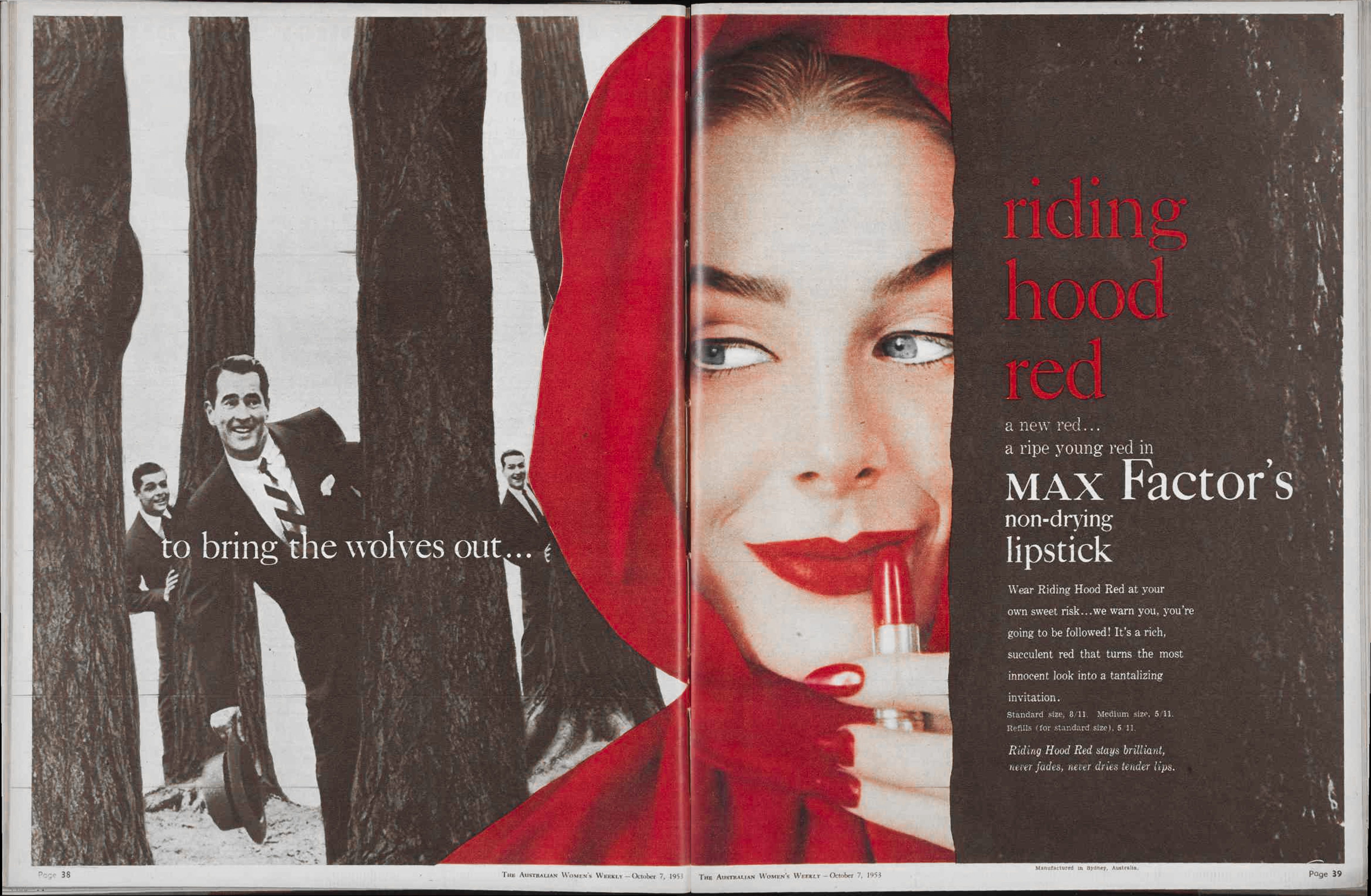
The duplicity of Death never being as he appears is a given, it is baked into these stories from their very origins. If he is a perfect husband, he might be hiding a monstrous side. Subsequently, if he is a Wolf (or a Beast), his soft furs are equally likely to be hiding some tenderness. Culturally, we, on some level, have also come to recognise the multiplicity of the Maiden. “Men live as beasts, and beasts are often, secretly, women” (via Orenstein, p9, emphasis my own). The Wolf in sheep’s clothing metaphor has served a great cultural relevance for Little Red, my dear, more so than for the Wolf: the figure of the huntress in the red cloak is a nearly minted cliché, a supposed “feminist” view of the character. Shooter video games (like MOBA’s) and MMO’s love to give her an oversized shotgun and an attitude, bypassing the monstrous feminine straight into the archetype of the brat. It seems the favoured way to modernise a fairytale is to hand the heroine her wits, a sharp scoff, and an independence complex. Newly-empowered, she is free to play the dominatrix, and dominate Death (the Wolf) back into the brush. Quite a salacious premise.
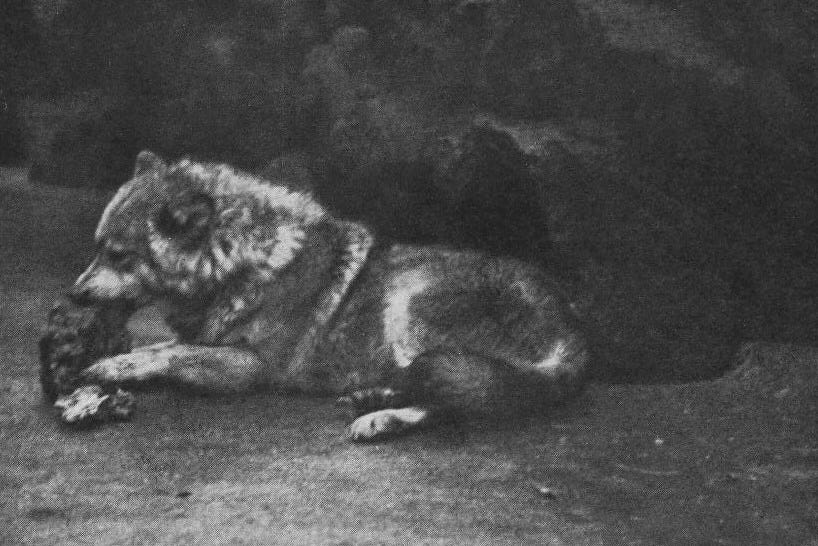
No other fairytale heroine has been given this treatment to the extent that Little Red Riding Hood has. Previously, I have brooded over the possibility of a feminist “Sleeping Beauty” retelling, and what such a thing would look like— Safe to say there are none who have given it an earnest try. Perhaps that is in large part due to the diverging definitions of what could be considered feminist (Some would argue the previous Little Red Girlboss suffices). Perhaps it is because, as Archive Source 3 hinted at, a truly empowered tale (like Angela Carter’s Little Red trilogy) defies neat categorisation into the feminist canon.
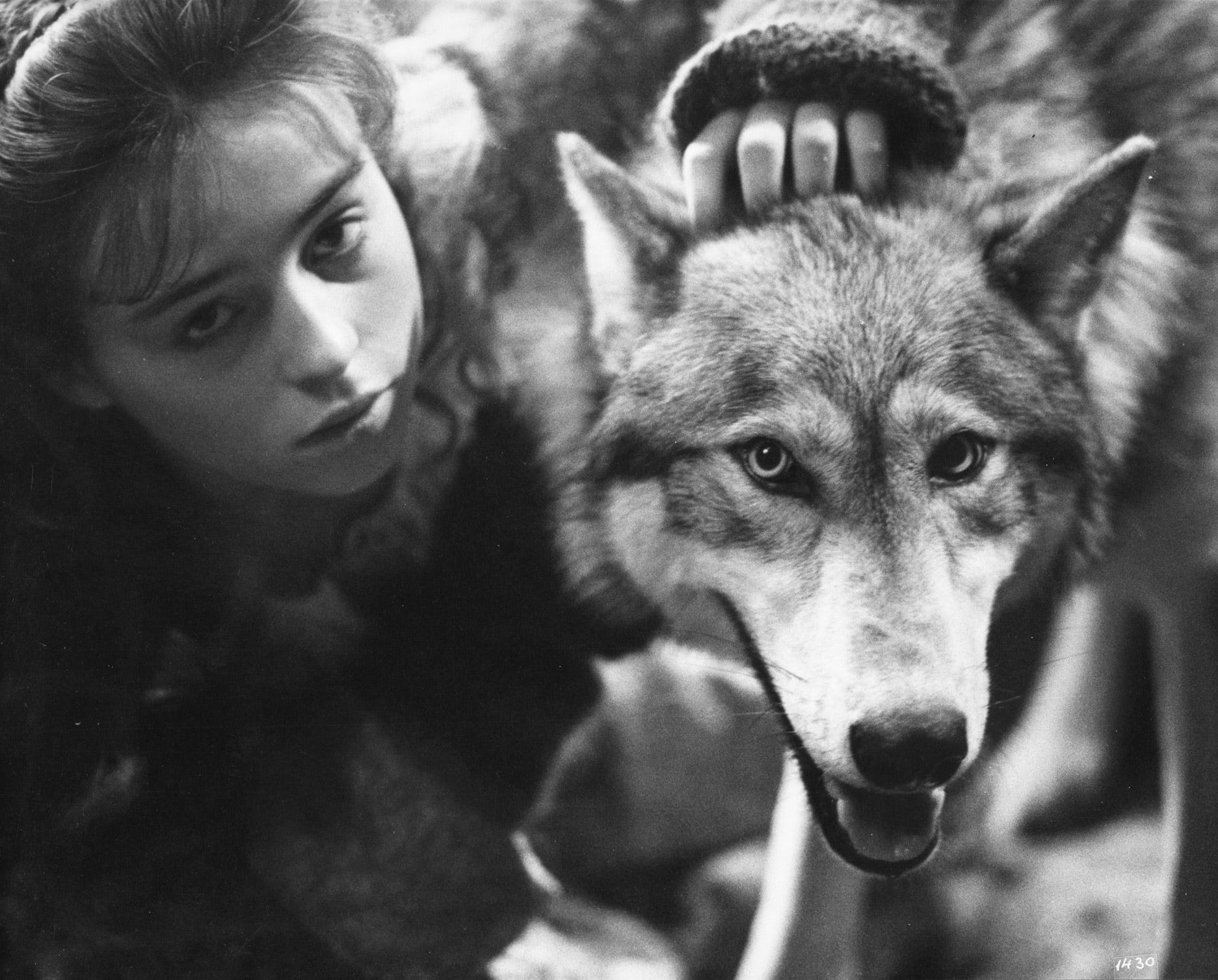
Either way, pop culture loves to try on the red cloak for size, rapidly assigning, shedding, and re-assigning meaning to Little Red. Very often, the Wolf gets a makeover into a werewolf (see; “Red Riding Hood”, 2011, & “the Company of Wolves”, 1984, based on the Carter stories). Sometimes, it is Little Red herself who is the Wolf; popular D&D show Roll 20’s fairytale themed campaign “Never After” recast her as a girl/wolf shapeshifter. The same goes for Ruby from the tv show “Once Upon a Time” (2011-2018)… An intriguing motif which we will briefly return to later, my dear. Don’t be so wolfish now, it is unbecoming.


Elsewhere, Little Red Riding Hood references are utilised more to subvert sexual expectations. The Robert Eggers film “the VVitch” (2015) dresses its seductive evil witch in a red riding cloak— a reference to the great popularity of similar cloaks in the 18th and 19th centuries, but undeniably also serving as a nod to the fairytale. Unlike Little Red, this witch is predator, not prey in these dark woods. Her donning the cloak is meant to lure her [male] victim into a false sense of security or power. In “True Blood” (2008-2014, S04E12 “And When I Die”), the vampire Jessica, another seductive character, dresses the part of Little Red for the season four Halloween-themed finale. Even beloved vampire slayer Buffy Summers dons the red cloak for an episode of “Buffy the Vampire Slayer” (1997-2003, S04E04 “Fear Itself”). Though she is meant to be a more literal interpretation (huntress rather than sexual predator), her exchange with Xander at the beginning of the episode does reference a sort of predation through Xander’s mock-creepy comment;
XANDER [eerily]: “What you got in the basket, little girl?”
BUFFY [as Little Red Riding Hood, unimpressed]: “Weapons.”
from “Buffy the Vampire Slayer” (1997-2003), S04E04, “Fear Itself”
II.IV What happens to selfish girls…
“I saw the incessant work of death: me: the lamb: me: the wolf.”
by Hélène Cixous
So Little Red has layers to her, which she needs to shed in order to meet the Wolf on equal terms, symbolised by the removal of her clothing. This “striptease” (Archive Source 3) serves a symbolic purpose, and it asserts what we have established time and time again; the meeting of Death and the Maiden requires persona to be peeled away. That much is true for both parties, though the context differs depending on the tale type. Previously, we have seen the different dynamics of bridal DatM, but really, these dynamics apply to all DatM stories. Death can either be the villain of the story (antagonistic DatM), or be a more gentle, recognising force (sympathetic DatM)— either way, much like the masculine in fairytales, his purpose is easy to measure through his relationship to the Maiden as a plot device. But don’t let the elaborate focus on Death’s traits fool you, my dear. It is only a mode of ease, as categorising the Maiden would prove much more substantial, contradictory, nuanced even.
The Maiden escapes definition almost entirely. Please, don’t make me drag Lacan back into this… “The woman does not exist”. This much we know. Femininity exists outside of the phallocentric order, yet also cannot be defined as simply being the absence of that same order. Within any equation of gender, she finds no easy home. She roams the woods of the symbolic order in a fashion uniquely her own. And yes, that includes a coy few steps off the path here and there.


Meanwhile, Death/Wolf exists on two functional planes; antagonistic or sympathetic. Most of the DatM stories we have previously examined in parts I, II, and III have been the latter, though bridal gothic has introduced us to the antagonistic side, slowly but surely. Traditionally, in “Little Red Riding Hood” (and its variants), the Wolf is antagonistic. Perrault’s moral posits as much. In strict contrast, the more typical DatM tale strips the monstrous away from Death/Wolf to reveal the genteel10, while Perrault’s wolf lover-boys require the genteel to be peeled away in order to reveal the monstrous. And yet, most remarkably, Little Red is not scared of the Wolf. Like most Maidens, she exhibits little more than a slight tremor before she is back to her curious self, wishing to take Death apart, see him up close, perform a thousand little autopsied inquests. The many authors of Little Red largely attempt to explain this lack of terror away by way of her ignorance, but there is almost a wink and a nod hidden under the scarlet red of her cloak, which she eventually undoes.
Under the quiet darkness, the girl slips into bed with the Wolf. One can only guess at her motives… Does she smell the thick iron scent of her grandmother’s blood, pooling in the floorboards and in her intended?
“Since in response to such direct and obvious seduction Little Red Riding Hood makes no move to escape or fight back, either she is stupid or she wants to be seduced.”
by Bruno Bettelheim, from “the Uses of Enchantment: the Meaning and Importance of Fairy Tales” (1976), p168, emphasis my own
Though fairytales often prescribe a feminine protagonist, the onus of desire within the tale is very rarely hers to wield. She is firmly placed within the active phrase, yes, but the plot happens largely to her. Little Red is no exception to the rule. Along the way, she is puppeteered by third party desires. Not once does the story stop to tell us what Little Red wants or thinks. We know she is beautiful, because others have affirmed this quality in her. She goes to visit her grandmother, because her mother instructs her to do so. She steps off the path purely for the momentary pleasure of wildflowers and berries. All her instincts on the page are primitive and immediate. We know not if she undresses as a result of being commanded to do so, or if she is simply claiming innocence to her own desires— surely, she knows it is not her grandmother, there in the dark. But that does not stop her wanting to find out.
Freud posited the question of feminine desire as one based in lack, which he called “penis envy”. To eventually develop into a “healthy” mode of [heterosexual] desire, Freud believed that the growing woman had to alchemise her deep frustration over lacking a penis (and consequent desire for a penis), into a desire for children. This is also the belief of so many fairytales; that the feminine protagonist’s desire (eg. will) for anything at all, will, at the end of the story, be firmly transformed into the desire to be a good mother and wife to whatever princely reward awaits her at the end. Remember; the fairytale is first and foremost an instrument of marriage, and homemaking serves such a cause. Snow White and Cinderella, for example, both exemplify a domestic prowess that foreshadows their marital status at the end of their stories (see; Orenstein, & “From the Beast to the Blonde” by Marina Warner, 1994). At the happy ever after, the perverse and unnatural forces of desire have been quietly channeled back into the status quo of marital bliss.
But Little Red displays none of her peers’ qualities; she is not a prudent student of self-denial, obedience, nor domestic virtue. When she leaves the path- arguably the one act in the story that is wholly her own- she does so purely for her own pleasure. She, in Freudian terms, is still governed by the “pleasure principle”, rather than the “reality principle”, which the ego instates in the service of self-preservation. She is still involved with the id, and a rejection of socially-sanctioned desires, whose only relevance is far off into the future. Only the direct reality is of relevance to her; the pleasure close enough to taste, and the pain within eyesight, to be avoided at all costs. Postponement is not yet on the schedule. Perhaps this is why she obeys the Wolf’s temptations, the story says, because she is too short-sighted to know better. And this ignorance that cloaks her is one she will, with repetition of the story, eventually have to grow out of… Or is it?
While Perrault’s version ends in untimely death, and Grimm’s version does have the heroine swear off repetition of her trials, there are translations that do the exact opposite; “[…] reinforced by the story’s concluding sentence, which does not have Little Red Cap say that she will never again risk encountering the wolf, or go alone in the woods. On the contrary, the ending implicitly warns the child that withdrawal from all problematic situations would be the wrong solution.” (via Bruno Bettelheim, “the Uses of Enchantment”, 1976 p181). The fairytale comes primed with the expectation of a Wolf, just like the Maiden is destined to cross paths with Death. One cannot exist without the friction of the Other. As such, there is no way to avoid confrontation. No obedience nor ignorance nor innocence will save you from the beast, my dear.


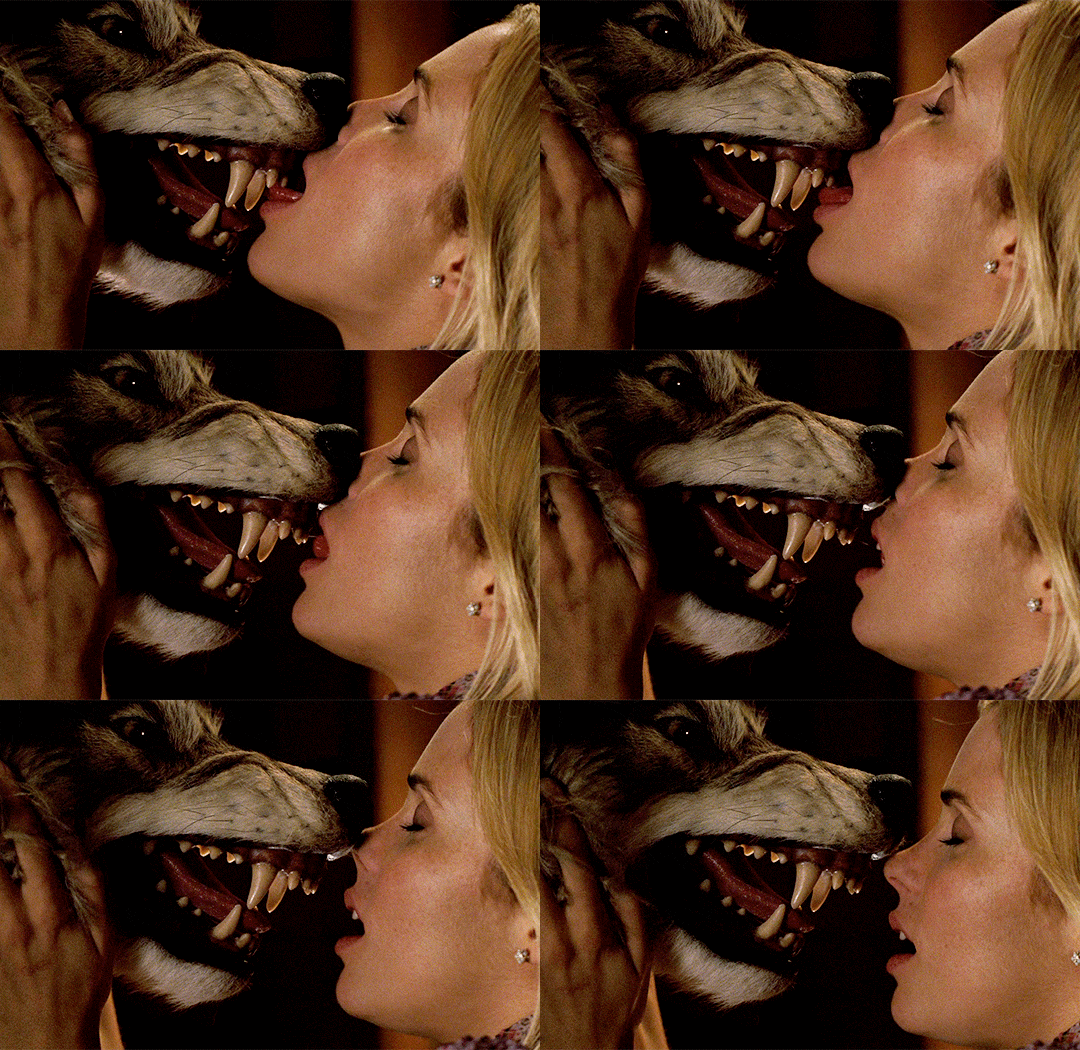
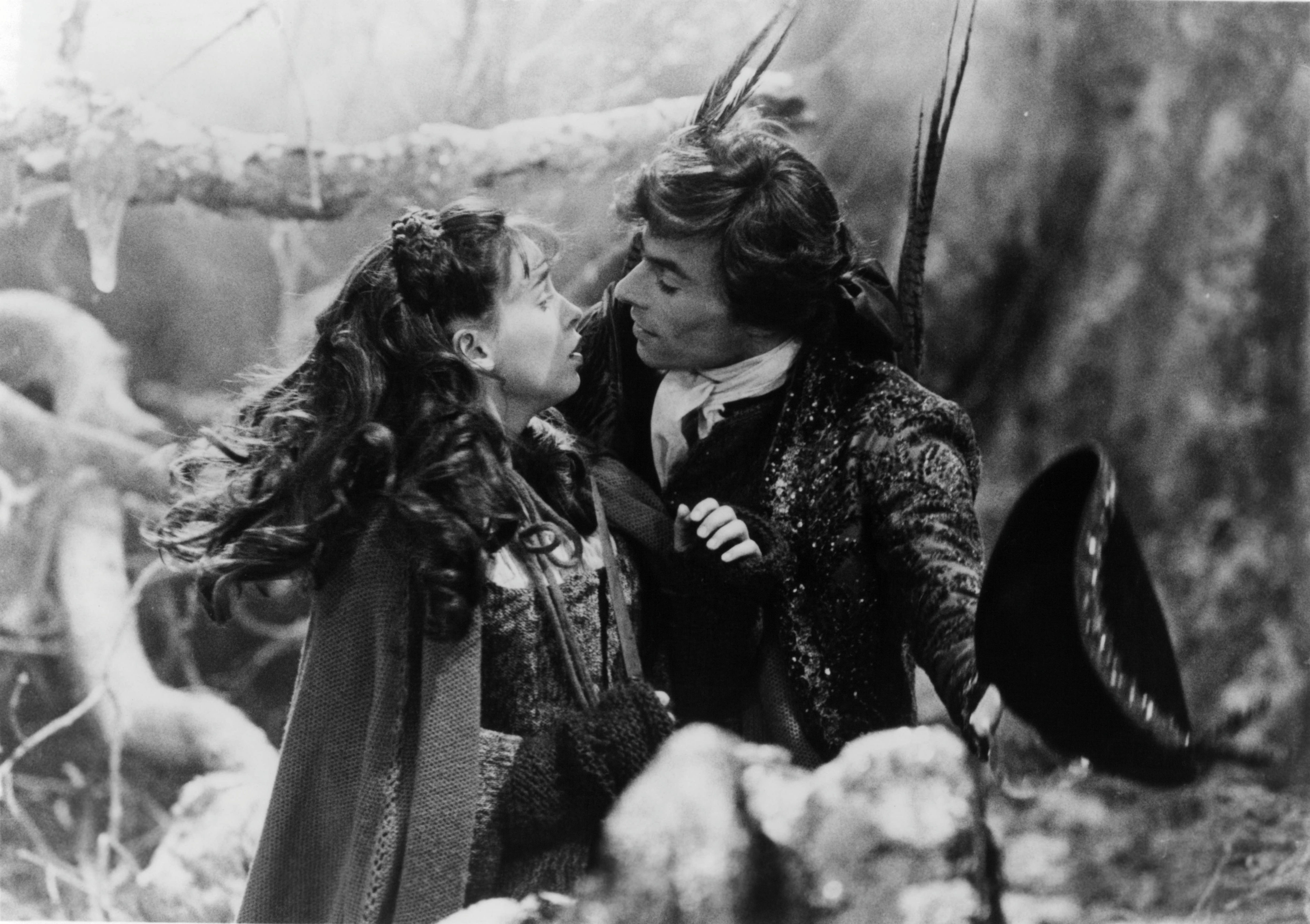
Ultimately, I wish to reject the branding of Little Red’s actions as pure simple-minded childishness. Rather, they are a matter of selfishness in the way that they directly contradict the expectations for women as selfless, sacrificing angels, and ultimately, mature future-planners. Clearly Little Red couldn’t care less about what others say is bad. She wants to see for herself whether the wolf has big eyes and sharp teeth. The village can whisper all they want. This is what I’ve always found interesting about Angela Carter’s adaptation(s) of Little Red Riding Hood; in “the Company of Wolves” (film, 1984), Rosaleen’s (Little Red’s) decision to sleep with the Wolf is entirely self-serving. The beast has just devoured her grandma, which is made explicit when poor Rosaleen steps on her granny’s glasses, discarded in the slaughter. But like her literary shadow-selves, Rosaleen does not seem particularly (or enduringly) scared or interested by this fact. No, she meets the Wolf with a guileless curiosity that is entirely rooted in her own exploration of pleasure.
Little Red’s selfishness is emblematic of the Maiden’s selfishness; in her meeting with Death/Wolf, she sidelines all forms of feminine propriety. Their connection allows her to re-negotiate the feminine ways that she was taught, partially to teach them to Death/Wolf, and partially to shed them in favour of a life that is more authentically selfish. The union of Death and the Maiden does very often result in a reinforcement of the marital status quo, yes, but it does not neatly sort itself back into the gendered structures beneath it. There is a manner of “unnaturalness” (read; the untraditional) that is allowed to live and prosper, if sometimes only for a short while…
Tragedy always lurks, my dear. It is the ultimate predator, lying in wait…
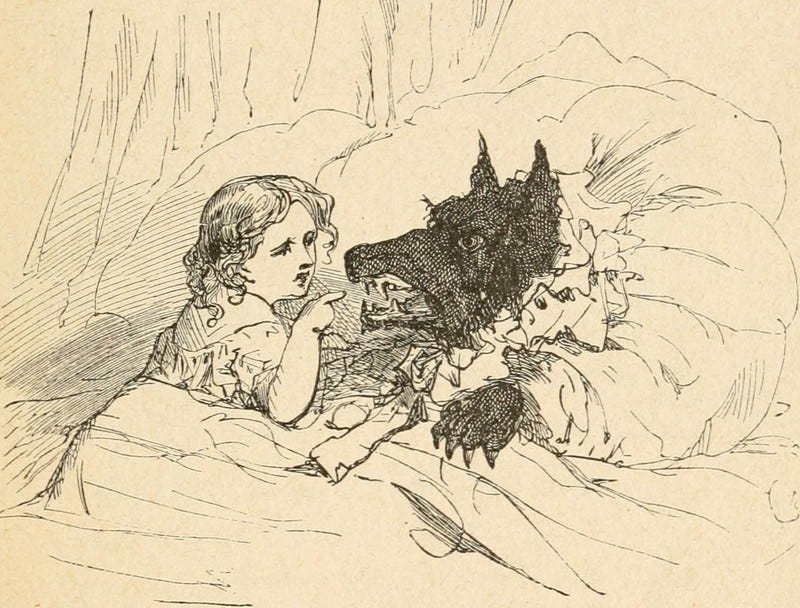
II.V All the Better to Be You!
“Read the beasts as the projections of a female libido, and they become exactly that autonomous desire which the female characters need to recognize and reappropriate as a part of themselves (denied by the phallo-centric culture)”
via Archive Source 3
The tale of Death and the Maiden is typically a tale of merging characters, bleeding into one another. By the end of the story, it is a given that Death will have softened, influenced by the Maiden’s tender exploration of him. The Maiden, on the other hand, is not fully guaranteed to harden up, learn to advocate for herself, or become more selfish. But she is also more likely to start off with a greater degree of nuance. As aforementioned, the narrative typically needs her to be a more layered catalyst for the story, the beginning of it, while Death’s transformation is often the end of it.
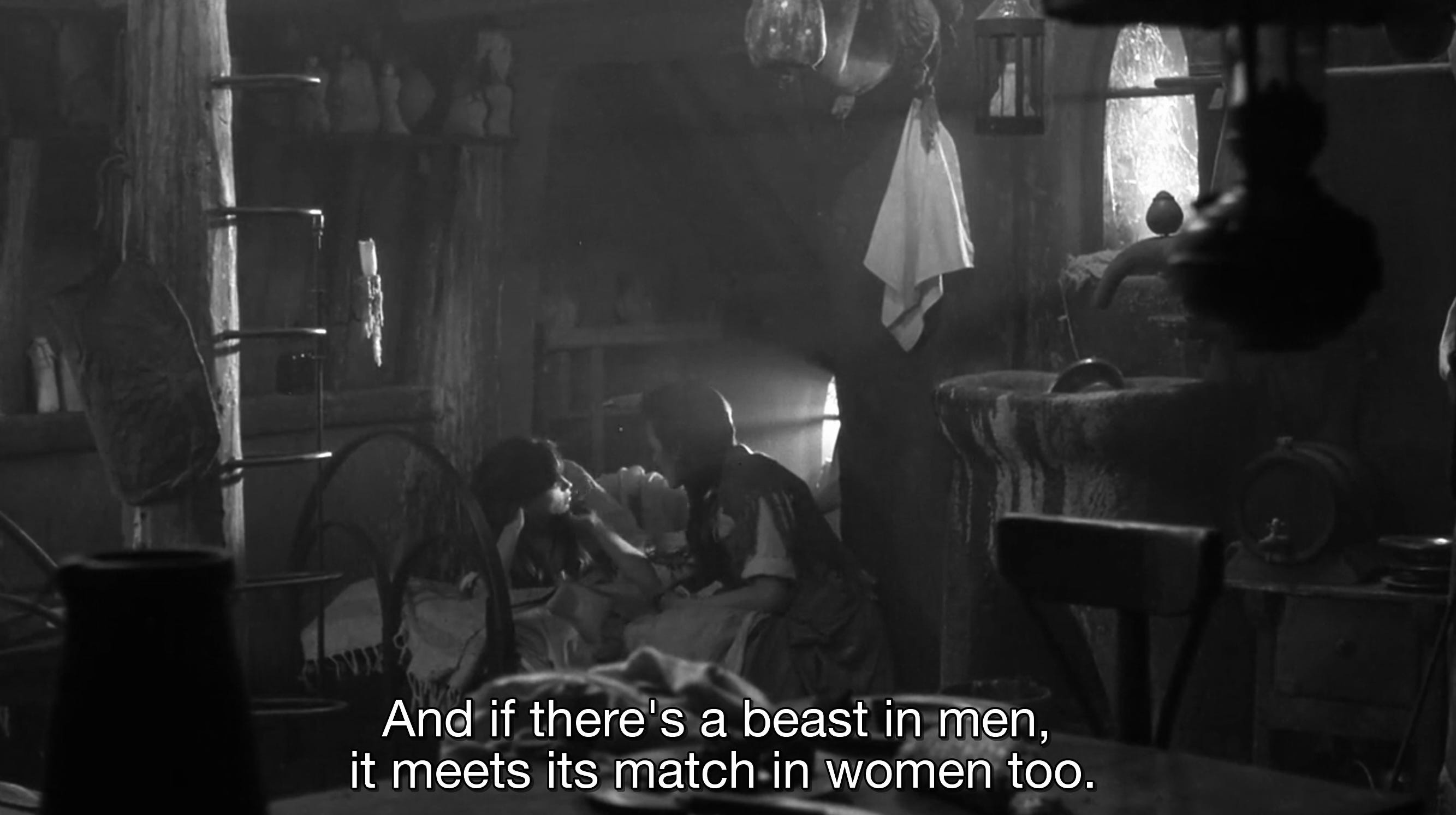
So, the Maiden character can have a degree of masculine within her (while the Death character is always overwhelmingly or exclusively masculine at first). Her desire for Death, then, is not necessarily always a desire to assimilate the masculine within her (for it is already there, to some extent). Rather, the desire for Death is a social desire for what is deemed “masculine”. The allowance to be selfish, to plunder a fortune of one’s own, to be the Wolf. Rosaleen’s mother in “the Company of Wolves” (1984) tells her with some amusement that “if there’s a beast in men, it meets its match in women too”. There, it’s largely meant to be an assertion of feminine lust, but this, too, is a norm that women get repressed in, and one the Maiden could be enviously eyeing in Death.
“The lamb loves its wolf. The wolf turns all white and starts quivering out of love of the lamb. The lamb loves the wolf's fragility, and the wolf loves the frail one's force. The wolf is now the lamb's lamb and the lamb has tamed the wolf. Love blackens the lamb.”
by Hélène Cixous, from “Love of the Wolf” (collected in “Stigmata”, 1998)
There is a [subconscious] envy for the benefits of overt masculinity within the social order; the ability to blend in with the status quo. Death may be Other, and he may be persecuted within the DatM story, but he still reaps at least some benefit of patriarchy / the phallocentric order. Living in his secluded castle (the Beast from “Beauty and the Beast”), as king of hell (Hades), or as apex predator of the forest (the Wolf), he has a space of his own for his brooding machinations. One he does not have to do any domestic work to maintain11. Oh, what bliss!
It is potent that the riding cloak central to Little Red’s story is red. Obviously, red is the colour of blood and violence, but is also associated with love and passion (hello, Intersection of Love and Violence). More interestingly though, red sticks out like a sore thumb in the forest, it paints a target on one’s back. Or at least, it can feel that way. In reality, my dear, wolves have dichromatic vision, meaning they cannot see the colour red. All the [social] conditioning that makes Little Red feel like a target is almost entirely invisible or foreign to the Wolf, and is bestowed upon her by others. That is not to say it is entirely in her head. Rather, the scarlet of her cloak makes her a target ripe for other humans to try and distill the measures of “proper” femininity (obedience, domesticity, self-denial) into her, telling her that to step off the path even once is tantamount to succumbing to evil. All of these warnings and mythologies of punishment only serve to shape Little Red into a more perfect, ignorant victim, who will never question any perceived authority.
Victimhood, like her cloak, is something given to Little Red by others, not some predestined martyrdom. Therefore, it is all the better to be shrugged off into the fire.


Little Red and the Wolf / Death and the Maiden circle in each other, that which they have repressed inside of themselves. “Dear” and “Dead” are only one letter removed, after all. This is why it is so easy to imagine Little Red as two-faced girl-monster or shapeshifter, both Maiden and Wolf. The cloak of social conditioning, versus the girl underneath it. Real and messy and selfish. This is the messy kernel of what Carter extracted from the tale, precisely because its heroine is so hard to categorise. Knowing and unknowing at the same time, she smiles up at the reader as she takes the first step off the path with just the faintest hint of plausible deniability. She wears the symbols of the victim, the bull’s eye cloak that screams for attention, which matters not to the Wolf. She seems to say, through straying and through stripping, that her pesky grandmother’s lessons are falling on deaf ears (and oh, what big ears you have!).
The purpose of the Death and the Maiden trope is a dual one of transformation and destruction. As Marina Warner writes; “When women tell fairy stories, they also undertake [this] central narrative concern of the genre— they contest fear; they turn their eye on the phantasm of the male Other and recognize it, either rendering it transparent and safe, the self reflected as good, or ridding themselves of it (him) by destruction or transformation12. […] In either case, the menace of the Other has been met, dealt with and exorcized by the end of the fairy tale.” (from “From the Beast to the Blonde”, 1994, p276). Oftentimes, this “dealing” with the unnatural is simply the act of accepting its existence within ourselves.
Writer Gillian Flynn said that “Dark sides are important. They should be nurtured like nasty black orchids.” Little Red Riding Hood, just beyond the page, is so close to being a story of a girl embracing her monstrousness (and by that I mean, her perfectly natural [sexual and social] desires). If only that pesky huntsman had not interrupted, who knows what would have happened. Hypnotised by the Wolf’s reign of the woods, and of himself, she starts to tread her own way through the dirt. She shakes off the layers of her prescribed femininity (stockings, dress). It is that perverse enchantment, like the one carrying the moth to the flame13, which is at the core of the Death and the Maiden trope, and which is illuminated most clearly by Little Red’s sacrifice. There, in the belly of the beast, she will await her fate with rapturous pleasure.
“We go all the way to the altar, to the butcher's, we can't help ourselves, we go all the way to where we don't want to go, it's irresistible. Pushed by desire and terror mixed.
The hour we ask of the wolf is the only one that impassions us. […] One must almost die in order to take pleasure in being made flesh, we've always known this. What time is it? Time to be eaten. Passion.
Ah if we could go over to die, taste, be tasted, and then return to this side. Ah if we could go all the way to the instant when what disgusts us intoxicates us,”
by Hélène Cixous, from “What is it o'clock? or The door (we never enter)” (collected in “Stigmata”, 1998)
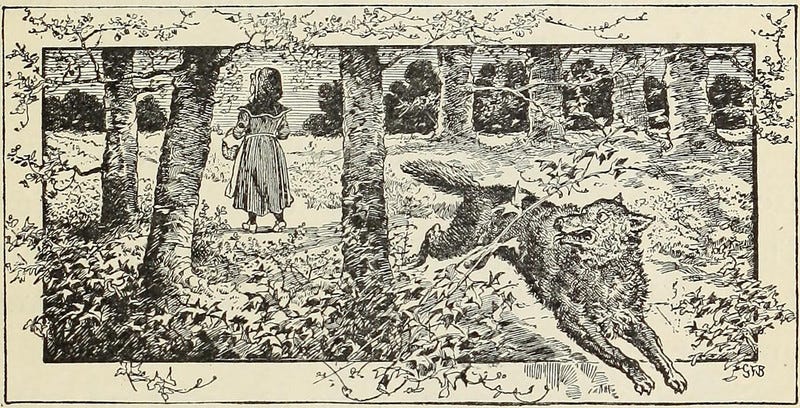
III. Error 404
In order not to overwhelm myself, I have decided to skip section III and the events calendar for this month… I’ll be doing a full recap of my absence soon, my dear, don’t fret. The newsletter will be back in full force much sooner than you know.
For now, let a girl gather her strengths, slowly but surely.
Obsessive Tendencies: What I’ve Loved Lately… ꩜
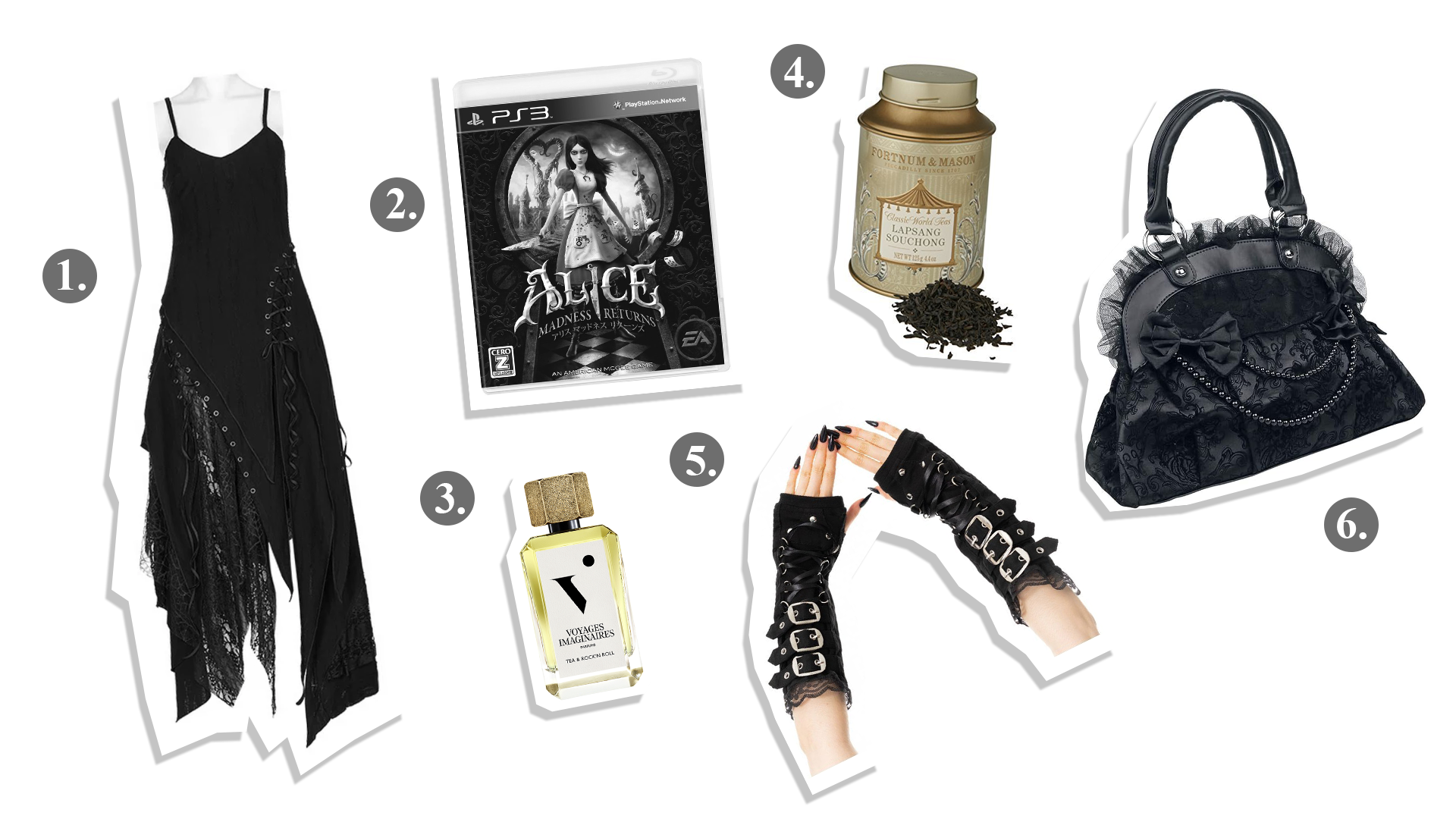
Punk Rave, Black mesh lace asymmetrical pointed gothic dress, [I always want to look like I got into an altercation with the haunted bramble forest from “Snow White” and narrowly escaped], £68 via Hard’n’Heavy
“Alice: Madness Returns” (2011) for PS3, [Picking up an old console for this has been so deliciously worth it; may the madness never end!], prices vary on Ebay / available for PC on Steam
Voyages Imaginaires, “Tea & Rock ‘n’ Roll” perfume, [Smells like lemon iced tea, or Fortnums sparkling tea. A perfectly light tea fragrance for this horrendously warm weather], £175 for 75ml via Bloom Perfumery
Fortnum & Mason, Lapsang Souchong, [My love affair with smoky tea is eternal. Compared to Marriage Frères’ “Lapsang Chinbara”, this is a much heavier, sharper option. Delightfully intense], £10.95 for 125g
Poizen Industries, “Monroe” Arm Warmers, [I’ve been loving the visual kei / haunted doll / steampunk / escaped from the circus / j-fashion vibe, what can I say?], £14.99 via Attitude Clothing
Banned Apparel, Black lace & Bow handbag, [If you can’t tell already, I’ve been needing the maximum amount of frills and lace on everything possible, even my purse], £34.99 via Ebay

“I have done nothing all summer but wait for myself to be myself again.” // “I feel entirely dehumanised by the sun now and wish for fog, snow, rain, humanity.”
by Georgia O’Keeffe // by Virginia Woolf
And that here, is the end of my August-ine ramblings. In truth, I am still trying my return on for size, adjusting the seams where necessary. If I had allowed myself to delay in it any further, I would have stepped away altogether. Not because of a desire to do so, my dear, but because of a growing believe in having lost my “spark”. My vocabulary, my mode of writing, my looms of thought— all had to be revived from the brink of death. The wells had almost ran dry. Truly, I felt myself anaemic with images. But despite it all, I have managed to revive and retrieve what little I could. Be patient with me in my recovery, please.
There is much more delayed gratification on the horizon. Paris calls for me again— A call which I will succumb to in a week or so. The three year anniversary of this Substack passed in silence on the 1st of August, when I was in the mountains, starting to exhale. It has not all been quiet dissolution and inactivity; the stress of the hotel (that accursed place) has settled firmly in my jaw, in my mouth, the most private place of all. Currently, it is a dish of black cherry jello in my fridge, waiting for me after surgery— I am now one tooth less familiar to myself, though the pain of it fades quickly. Yesterday, in the shadow of church and Kristeva14, I articulated my return to a dear friend as a trudging through gelatine. Every step is met with resistance; re-learning to love the sensation of sugar water on the skin is a goal in and of itself, my dear. You just have to wade and see what sticks.
Until my next letter,
With love (and violence),
x Sabrina Angelina, the White Lily Society 𐔌՞. .՞𐦯
Currently reading: “the Mask Falling (the Bone Season: IV)” (2021) by Samantha Shannon // Most recent read: “Little Red Riding Hood: Sex, Morality, and the Evolution of the Fairy Tale” (2002) by Catherine Orenstein
White Lily Society links // Sabrina Angelina links

Don’t stray from the path now, my dear. You know there’s safety in numbers out in these dark woods… Therefore, why not join the White Lily Society? Join us, and become a martyr of deliciousness…

📼 Song(s) of the (past) month(s):
[May] “Big Dog” - the Last Dinner Party
[June] “Too Late to End” - Coral Head
[July] “Plastic Couch” - Violet Grohl
From a letter, by Franz Kafka.
If you ask me, the ideologically “pure” fantasy is merely a puritan construct, an impossible thought experiment. While it is good to be aware of the implications of certain fantasies, there is no fantasy that will morally purify you. The parallel between socially acceptable “empowered” dominant woman, vs. poor martyred “disempowered” submissive woman was a topic briefly unpacked at the end of letter 20 about the “Sleeping Beauty” fairytale.
See for example, the “the Old Testament” (“Isaiah 11:6”): “The wolf will dwell with the lamb… […]”
Available in full on the Internet Archive.
Also available in full glory on the Internet Archive.
I think the description of pins or needles much enticed me, in the sense that, to my modern sentiments, the two are entirely and seamlessly comparable. Pins and needles alike are both sharp, and they are both sewing instruments, they reek of domesticity. For the life of me I cannot figure out the subtext of Little Red’s choice of pins— Is that the lesser evil of the two? What is that supposed to say about out intrepid protagonist? I suppose pins are a way of fastening fabrics, a tool in the process. Needles are the active component; joining two separates into one whole.
Bizarrely, a cat then appears and calls her a slut for eating her grandmother (?!)
Established, among others, in Orenstein and Bettelheim, both quoted at length in this letter.
As always; the use of feminine/masculine over female/male is a deliberate choice rooted in the belief that gender norms and modes are largely a constructed, taught thing. I also dislike, for example, the idea that violence is more innate to men biologically, rather than simply a result of the specific ways in which we condition masculinity.
I did not find a spot for it in the main body, but this fragment is relevant;
"She loves the wolf. She does not love the lamb. Not just any wolf. She loves the wolf that is capable of love.
It is even more complicated: she loves the wolf who contains, hides or reveals an unexpected sweetness in his violence.
The sweetness of the cruel is a greater sweetness.”
by Hélène Cixous, from “The Story of the Wolf who loves the Lamb he does not Eat” (collected in “Rootprints: Memory and Life Writing”, 1994)
The union of Death and the Maiden subsequently also rids her of the domestic burden; the marriage of Beauty and the Beast in their fairytale is littered with servants to do this task, lifting Beauty from house-hardened peasant to part of the bourgeois leisure class. Even during courtship, the Beast utilises his servants to rid Beauty of the weight of gendered domestic expectation— touched upon in letter 25.
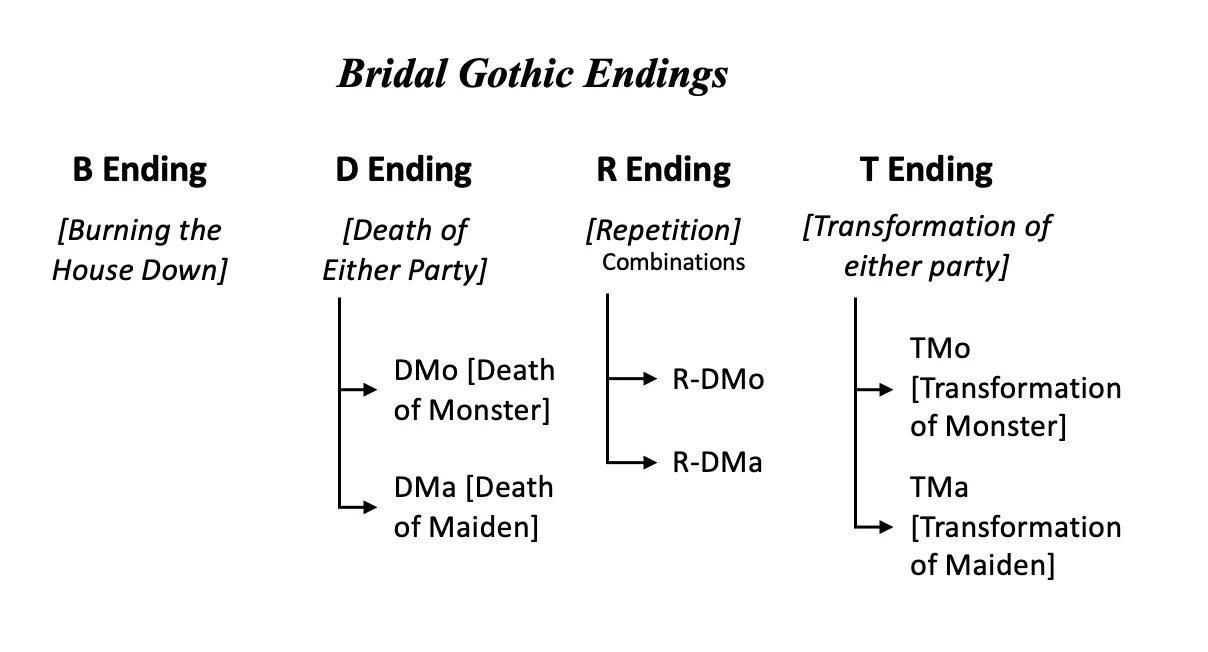
I have previously categorised all the possible sub-types and endings for bridal DatM in letter 29. But the ending chart is attached here again for reference;
Moths are often representatives of the soul, which is poignant here.
This was after Institute 17’s brilliant “Kristevathon”, organised by my dear friends ester freider and malina ˚₊‧꒰ა ☆ ໒꒱ ‧₊˚
[I also wanted to find a place for this image…]